
Marketing collateral: Definition, types and examples

Marketing collateral is any material a brand produces to communicate its message, promote its products and support its sales process. But creating strong collateral is only half the challenge. Getting it organized, approved, and in front of the right people is where most marketing teams lose ground.
This guide covers what marketing collateral is, the most important types to know, how to build a creation process that works and how to manage a growing collateral library as your team scales.
What is marketing collateral?
Marketing collateral is any material a brand produces to promote its products, services, or identity. The term originally referred to printed sales materials like brochures and flyers. Today, the marketing collateral definition covers a much broader range: websites, blog posts, social media content, videos, eBooks, case studies, email campaigns, and sales presentations. If it carries your brand message, helps a potential customer understand your offer or supports a sales conversation; it qualifies.
Marketing collateral vs. marketing assets
The terms are often used interchangeably, but they describe different things.
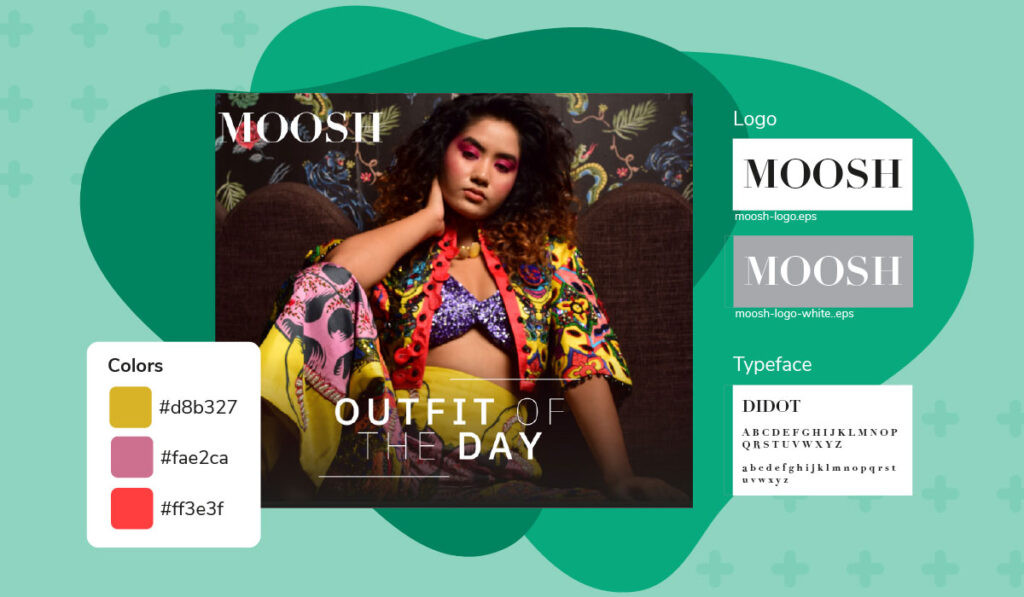
Marketing assets are the raw brand components: logos, color palettes, fonts, photography, and brand guidelines. They’re the building blocks. Marketing collateral is what you create using those digital marketing assets. A brochure, a social graphic, a product video, an email template: these are collateral.
Think of it this way. A high-resolution product photo is a marketing asset. The campaign banner you design using that photo is marketing collateral.
The distinction matters practically. Your assets need security, version control, and access for the right teams. Your collateral needs to be produced consistently and distributed at scale. Managing both from the same system is where digital asset management (DAM) becomes invaluable.
Types of marketing collateral
The right mix depends on your audience, your industry, and where a buyer is in their decision process.
Printed marketing collateral
Printed materials such as brochures, flyers, catalogues, sell sheets and direct mail remain standard in industries where in-person sales conversations happen. A well-designed brochure gives a salesperson something to leave behind; a product catalogue gives a buyer something to reference. Even in a digital-first world, print can stand out.
Digital marketing collateral
Digital marketing collateral covers everything delivered online: websites, landing pages, eBooks, white papers, email templates, sales presentations, and digital ads. It’s the dominant format for most B2B brands because it’s faster to distribute, update, and track.
Digital collateral has one critical advantage over print: it can be updated. When messaging changes or a product evolves, digital assets can be revised without reprinting thousands of copies. This makes version control a priority, and it’s where collateral management becomes essential.
Video content
Video is one of the most engaging formats in a marketing collateral mix. Product demos, customer testimonials, brand films, explainer animations and webinar recordings all qualify. According to Wyzowl’s Video Marketing Statistics, 63% of people say they’d most like to watch a short video when learning about a product or service. Video can be repurposed across websites, social media, email and sales presentations, making it one of the highest-ROI formats when it’s well managed.
Social media and infographics
Infographics and social graphics make complex ideas easy to scan and share. They perform especially well at the awareness stage when a buyer is learning about a category for the first time. Social-native formats like carousels, short-form video and branded templates are increasingly central to how brands reach new audiences.
Case studies and testimonials
Case studies are among the most persuasive pieces of marketing collateral for buyers in the evaluation stage. A well-structured case study shows a real customer with a real problem who achieved a measurable result. Testimonials work similarly at shorter lengths. Both formats build credibility in a way that brand copy alone cannot.
Email and sales enablement materials
Email campaigns, drip sequences, and sales decks belong in any marketing collateral inventory. Sales enablement materials like one-pagers, battlecards and objection-handling guides sit at the intersection of marketing and sales. They’re often the collateral that most directly influences a deal, which makes it essential that sales teams can find the right version quickly.
Benefits of marketing collateral
Well-built marketing collateral does more than fill a content calendar. It creates repeated, consistent touchpoints that move buyers from awareness to purchase.
Builds trust and brand recognition
Buyers need repeated, consistent exposure to a brand before they’re ready to buy. Marketing collateral creates that exposure. When brand identity, tone, and messaging are consistent across every piece of collateral, buyers begin to recognize and trust the brand. Inconsistent collateral has the opposite effect: it signals disorganization and erodes credibility.
Supports sales teams
Marketing collateral gives sales teams the materials they need to move conversations forward. A well-timed case study addresses a prospect’s concern. A product one-pager gives them something to reference after a call. When sales teams can find and share the right collateral quickly, they spend less time searching and more time selling.
Engages buyers at every stage of the journey
Different collateral works at different stages. Awareness-stage content like blog posts, infographics and social media introduces your brand to buyers who don’t know it yet. Consideration-stage content like eBooks, webinars and comparison guides helps buyers evaluate options. Decision-stage content like case studies, demos and pricing pages gives buyers the confidence to act. A strong collateral strategy maps each format to the stage where it performs best.
How to create effective marketing collateral
Creating collateral that performs requires more than good design. Use this checklist for every new piece you produce.
- Define your audience and objective
Before briefing a designer or writer, identify who this piece is for and what it needs to do. Is it for a buyer comparing vendors or a first-time visitor? Should it generate a lead, support a sales call or build awareness? Every creative decision follows those two answers.
- Align messaging and design with your brand guidelines
Collateral that looks or sounds different from your other materials confuses buyers and weakens brand identity. Before drafting copy or designing a layout, pull your brand style guide and confirm the correct logo, colors, fonts and tone of voice. Make sure the team is working from the current approved version.
- Choose the right format for the channel
A piece designed for print won’t work on mobile without adaptation. A video optimized for LinkedIn won’t perform the same way on YouTube. Design for the primary distribution channel first, then adapt for secondary uses.
- Include a clear call to action
Every piece of marketing collateral should direct the reader toward a next step: request a demo, download a resource, contact sales or visit a product page. Make the CTA specific and prominent. Collateral without a clear next step is a missed opportunity.
- Review against brand standards before publishing
Before a piece goes out, confirm the logo is the approved version, the colors are correct, the copy matches approved messaging, and all product names are formatted correctly. An approval workflow makes this step repeatable and consistent as your team grows.
- Distribute to the right people
Getting the right collateral to the right audience at the right time is as important as creating it. Determine whether a piece belongs in a public-facing portal, a sales enablement platform, an email campaign or a gated resource center.
- Measure and refine
Track how each piece performs. Which case studies get opened? Which one-pagers do sales teams actually share? Use that data to prioritize future production and cut formats that aren’t working.
Marketing collateral management
Creating strong marketing collateral is only half the challenge. Keeping it organized, current and findable is where most teams lose ground.
As libraries grow, the same problems emerge: files scattered across shared drives and email threads, sales teams working from outdated versions, designers spending hours searching for an approved logo. The cost of disorganized collateral isn’t just wasted time. It’s inconsistent materials reaching customers, off-brand assets going out the door and deals slipping because the right one-pager couldn’t be found.
A DAM platform is built for marketing collateral management at scale.
What to look for in marketing collateral management software
The right platform solves three problems that derail marketing teams every day: finding assets, keeping them accurate, and getting them to the right people fast.
Findability
If your team spends more than a few seconds searching for an asset, your system is working against you. Look for AI-powered search and metadata filtering that goes beyond folder navigation, including the ability to search by visual content, not just file names or tags someone remembered to add.
Governance
One outdated logo in a partner deck can undo months of brand work. Look for version control, approval workflows and expiration controls that keep old or unapproved assets out of circulation automatically, without relying on someone to manually clean up the library.
Distribution
Collateral that gets emailed around is collateral you cannot control. Look for branded portals, secure share links and channel integrations that get the right version to sales teams, agencies, partners and regional offices without a manual handoff every time.
Why choose Canto for managing your marketing collateral
Canto DAM is built to solve all three. AI Library Assistant automatically categorizes, tags and enriches assets on upload, so anyone on the team can find what they need in seconds without digging through folders or asking around. And when metadata falls short, AI Visual Search lets teams describe what they’re looking for in plain language and pull the right visuals instantly, even assets that were never manually tagged.
On the governance side, Brand Studio gives teams locked, on-brand templates they can customize without breaking anything, so collateral stays consistent from the start. Approval Hub then keeps outdated and unapproved assets out of circulation, so what reaches your sales teams, distributors and external partners is always current and on brand.
For distribution, Media Publisher pushes assets directly to the channels that need them, no manual handoffs required. And for teams sharing collateral with agencies or regional offices, Portals and Style Guides give partners access to approved materials without giving up brand control.
Ready to see it in action? Book a demo or take a product tour and we’ll show you exactly how your marketing collateral gets found, approved and delivered faster with Canto.
Frequently asked questions about marketing collateral
What is the definition of marketing collateral?
Marketing collateral is any material a brand produces to communicate its message, promote its products or services, or support its sales process. It covers both printed materials such as brochures, catalogues and flyers, and digital content such as websites, eBooks, social media graphics, video and email campaigns.
What are examples of marketing collateral?
Common examples of marketing collateral include brochures, product one-pagers, case studies, eBooks, white papers, sales decks, email campaigns, infographics, social media graphics, product demo videos and landing pages. Sales enablement materials like battlecards and objection-handling guides also fall under the marketing collateral umbrella.
What is digital marketing collateral?
Digital marketing collateral is any marketing material produced and distributed in a digital format. This includes websites, landing pages, digital ads, eBooks, email templates, social media content, video and online sales presentations. Digital collateral is faster to update, distribute and track than print, which makes version control and centralized management especially important.
What is the difference between marketing collateral and marketing assets?
Marketing assets are the raw brand components: logos, fonts, photography and brand guidelines. Marketing collateral is what you build using those assets. A product photo is a marketing asset; the campaign banner you design with it is marketing collateral. Assets are inputs; collateral is output.
What is marketing collateral management?
Marketing collateral management is the practice of organizing, storing, governing and distributing marketing materials so teams can find the right version at the right time. It includes maintaining a centralized asset library, enforcing brand approval workflows and controlling how collateral is shared with sales teams, partners and external stakeholders. Most organizations use a digital asset management (DAM) platform to handle this at scale.